hab · Mobility · Web + Mobile
From concept to MVP: Designing multi-sided ride sharing platform to validate its feasibility
Overview
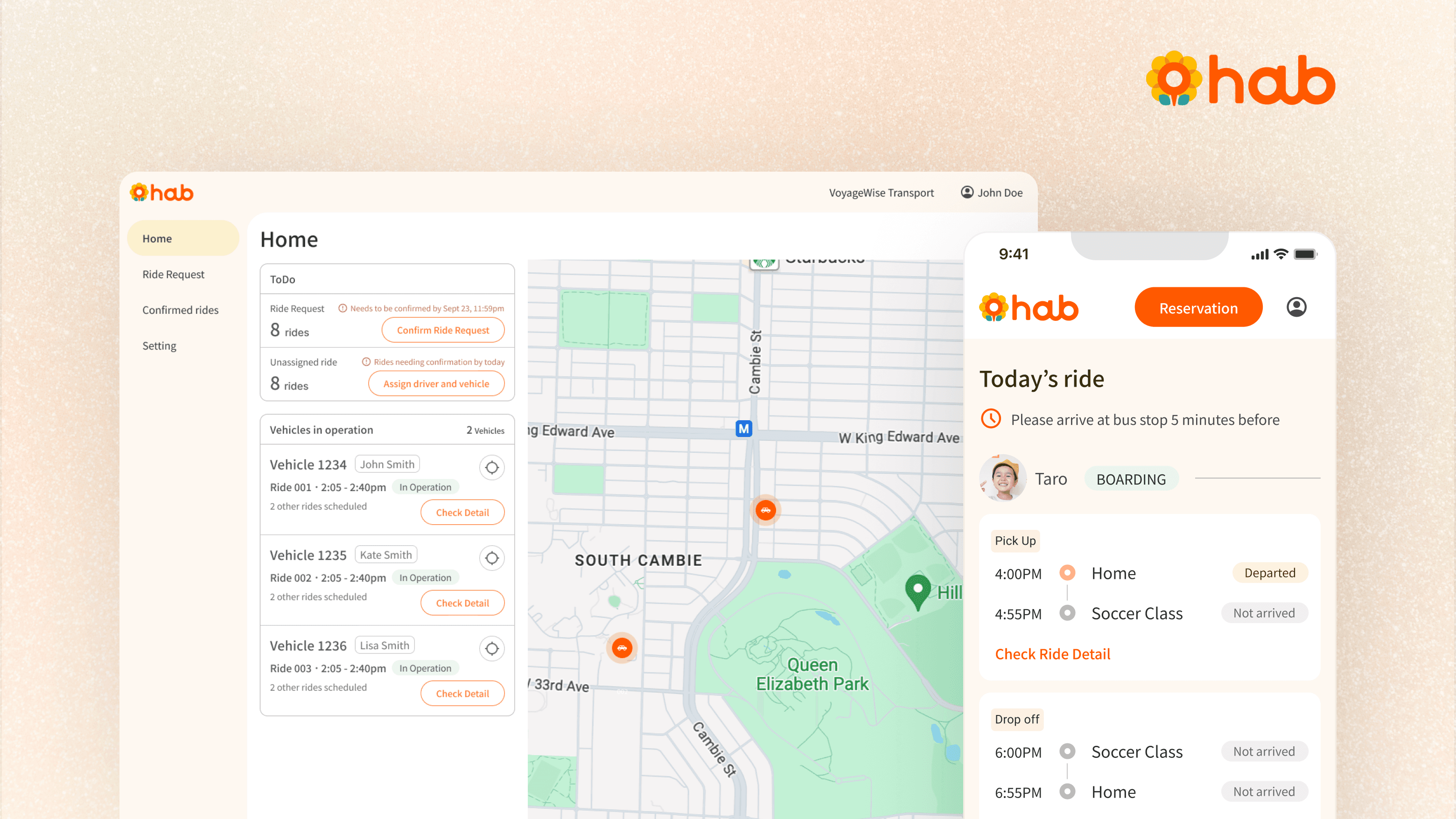
hab was an early-stage startup exploring a transportation service that helped families coordinate rides for their children with trusted drivers. As the company’s first and sole designer, I worked with families and the founding team to define how the service should operate, then designed the connected experiences for parents, drivers, operators, and administrators. We shipped the product for a two-week pilot with 20 families, where 88% used the service more than once and 90% completed onboarding without support.
Outcome at a glance
- Achieved an 88% repeat usage rate during the pilot, with parents reporting reduced transportation burden and strong demand for the service to continue.
- 90% of families completed registration, booking, and their first ride without contacting support, reducing operational overhead
- Generated the evidence needed to validate customer demand while informing a strategic pivot from a direct-to-consumer model to a partnership-based approach.